How to care for your dog's paws – a pharmacist explains how
Angelika Maria WallisAs a pharmacist and dog lover, I explain in this article in detail: Why is paw care so important? How can I recognize problems early – and which natural products really help?
Table of contents
- 1. Why paw care is so important for dogs
- 2. Anatomy of the dog's paw
- 3. Common problems with dog paws
- 4. Paw care step by step
- 5. Paw care compared to the seasons
- 6. What to do in case of injuries or inflammation?
- 7. Paw care and nutrition
- 8. The role of regular check-ups and maintenance
- 9. Natural paw care & home remedies
- 10. FAQs about dog paw care
- 11. Conclusion: Healthy dog paws – for a lifetime
1. Why paw care is so important for dogs
Your dog's paws carry him through life – over asphalt, forest paths, snow, heat, and more. They are subjected to enormous stress every day. Without regular care, minor problems can quickly develop into painful conditions.
Paw care is therefore not a luxury, but preventative healthcare. When done correctly, it protects against:
- Cracks, dryness and wounds caused by cold, heat or road salt
- foreign objects such as splinters, pebbles or thorns
- Infections and fungi caused by moisture and dirt
- Lameness or malformations caused by excessively long claws
With just a few steps, you can maintain your dog's paw health in the long term.
2. Anatomy of the dog's paw
2.1 Pads, claws, spaces: the main components
A dog's paw consists not only of "paw pads", but of several finely coordinated parts:
- Pads: Serve as natural shock absorbers and protect bones and joints.
- Claws: Help with digging, running and braking – must be trimmed regularly.
- Gaps and crevices: Dirt, snow, or splinters collect there – this is where irritations often occur.
- Hair: Longer hairs often grow between the pads, which can lead to matting.

2.2 How sensitive are dog paws really?
Although the skin on the pads of the feet is more robust than on other parts of the body, it is still sensitive to:
- Mechanical friction (e.g. asphalt, gravel)
- Temperatures – burns in summer and cracks in winter are not uncommon.
- Chemicals (e.g. road salt, cleaning agents)
Regular inspection and care help to maintain and strengthen the natural protective system of the bales.
3. Common problems with dog paws
3.1 Dry, cracked bales
These cracks are often caused by cold, heat, dry soil, or chemical exposure. If left untreated, they can become painful and prone to infection.
3.2 Foreign bodies, cuts, irritations
Sharp stones, thorns, or shards of glass can burrow unnoticed into a paw. Road salt residue in winter or grit in summer are particularly dangerous.
3.3 Infections and fungal growth
Damp, poorly dried spaces between the toenails can lead to skin irritation and fungal infections. Early signs include odor, redness, or itching.
3.4 Excessive leakage – a warning sign?
If your dog frequently licks or nibbles its paws, this could be due to:
- itching or pain
- Injuries, splinters, or inflammation
- Allergies or stress
At that point, you should definitely examine the paw closely or seek veterinary advice.
3.5 Overgrown claws and their consequences
Long claws can cause pain when walking, lead to deformities, and even grow into the paw pads. Therefore: trim them regularly or have them trimmed by a veterinarian.

4. Paw care step by step
4.1 Cleaning after the walk
After every walk – especially in snow, rain or on forest floors – you should briefly clean your paws:
- Rinse with lukewarm water to remove salt, mud, and pollutants.
- Carefully remove foreign objects (stones, splinters) with tweezers.
- Dry gently with a soft towel – especially between the toes!
Note: For sensitive dogs, a mild dog shampoo can occasionally help to stabilize the skin flora.
4.2 Check & visual inspection of the paws
A careful inspection of the pads and claws should be part of the routine:
- Are there any cracks, bloodstains, or redness?
- Do the paws smell unusual?
- Does the dog lick a particular spot unusually often?
If detected early, problems can be easily treated – before pain or inflammation develops.
4.3 Trimming hair & claws
Hair between the pads should be regularly trimmed with rounded scissors – this prevents matting and dirt accumulation.
The claws also need care:
- Rule of thumb: If you can hear the claws "clicking" on hard surfaces, they are too long.
- Use high-quality nail clippers or have them trimmed by a veterinarian.
- Avoid the quick (the blood-filled part of the claw) – if unsure, have it cut by a professional.
4.4 Care with paw balm – how to do it right
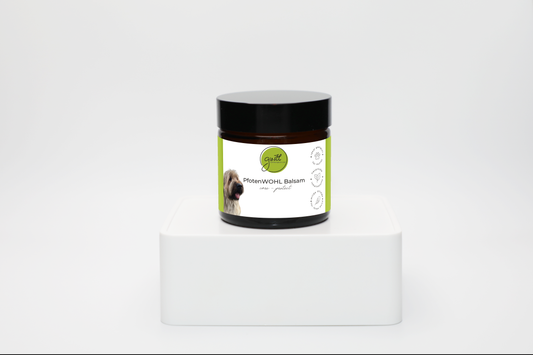
After cleaning and checking, you can apply a high-quality paw balm – e.g., the PawWellness Balm from Gustl :
- Soothes dry or cracked pads
- Protects against environmental influences such as heat, cold, and road salt.
- Provides moisture through plant-based oils such as coconut, calendula, or jojoba oil.
Here's how: Massage a small amount into the paws – especially into the pads and between the toes. Ideal after walks or in the evening before bed.

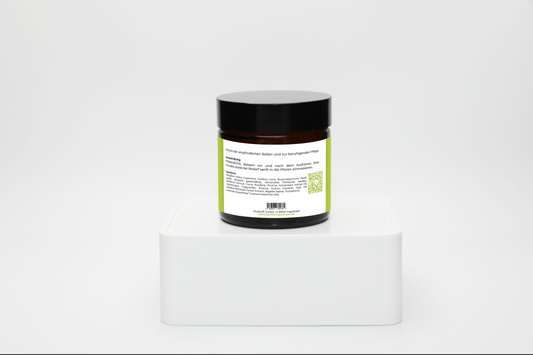
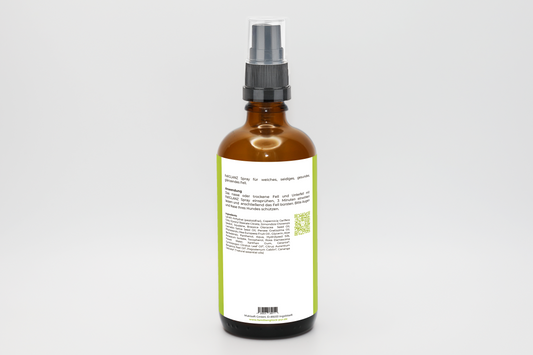
PawWell Balm by Gustl
- Protective and nourishing: Our paw balm forms a protective barrier. The balm protects your dog's paws from hot asphalt, snow, and road salt.
- Prevents dehydration: The moisturizing formula prevents dehydration and keeps the sensitive skin on your dog's paws supple.
- Supports regeneration : soothes stressed paws and supports the healing of small cracks and injuries.
- Universal application: Suitable for all breeds for holistic and vegan care.
4.5 Protection against extreme weather
In winter:
- Apply paw boots or balm to protect against ice, salt, and cold.
- Clean paws thoroughly after walks
In summer:
- Hot asphalt can cause burns – it's best to walk in the morning or evening.
- Test: If you can't touch the asphalt with the back of your hand for 5 seconds, it's too hot for your dog.
5. Paw care compared to the seasons
5.1 Caring for dog paws in winter – tips for ice, snow, and salt
The cold season is particularly challenging for sensitive paws:
- Road salt irritates the pads of the feet and can cause inflammation.
- Ice buildup between the toes can be painful and dangerous.
- Cold weather dries out the skin and promotes cracking.
Recommended measures:
- Apply a protective layer of PawWell balm before the walk.
- Clean with lukewarm water after the walk
- Gently dry paws and apply additional care if necessary.
5.2 Caring for dog paws in summer – beware of hot asphalt!
In summer, heat is an often underestimated danger:
- Asphalt heats up to 60 °C – risk of burns!
- Dryness caused by dust, heat and UV radiation leads to brittle bales.
What helps?
- Walks in the early morning or evening hours
- Regular care with moisturizing balm
- If necessary: Use dog shoes, e.g. on asphalt or sandy beaches.
6. What to do in case of injuries or inflammation?
6.1 First aid for cracked heels or wounds
You can treat small tears or superficial wounds yourself:
- Clean gently with water
- Remove impurities (e.g. splinters) with tweezers.
- Apply paw balm – e.g., PawWell for Regeneration
- Observe: Is the dog licking excessively? Is it limping?
6.2 When to go to the vet?
Veterinary assistance is needed in the following cases:
- Deep, heavily bleeding wounds
- Inflammation with pus, swelling, or odor
- Limping, lameness, or constant licking despite grooming
Fungal infections or parasites (e.g., mites between the toes) also require professional treatment.
7. Paw care and nutrition
7.1 Nutrients for healthy bales
Healthy dog paws start in the food bowl. A balanced diet strengthens the skin from within.
- Omega-3 and -6 fatty acids: Promote skin elasticity and regeneration
- Biotin and zinc: Important for skin and nail strength
- Vitamin E: Supports natural cell protection

Omega-3 ENERGY
Omega-3ENERGY is a supplementary feed for dogs for the targeted supply of Omega-3 fatty acids and Vitamin E.
I would like to try that.7.2 The relationship between diet and skin health
Poor food quality or intolerances can directly affect the paws:
- Allergies often manifest as itching and licking of the paws.
- Too little fat or nutrients can dry out the skin.
Pharmacy tip: Pay attention to high-quality ingredients, sufficient oil content, and supportive supplements if needed.
8. The role of regular check-ups and maintenance
8.1 Routine creates security
A quick daily paw check only takes 1-2 minutes – and protects against long-term problems.
Things you should pay attention to:
- Moisture, cracks, odor, or swelling?
- Overgrown claws or matted fur?
- Any changes in behavior when walking or paw licking?
8.2 Strengthening the dog-human relationship through grooming
Grooming time is relationship time. It fosters trust, closeness and physical contact – especially important for young dogs or shelter dogs.
Patience, praise, and treats make paw care a positive experience – for both sides!
9. Natural paw care & home remedies
9.1 Coconut oil, calendula & Co. – what is really suitable?
Many natural ingredients have proven their worth – for example in our PawWellness Balm :
- Coconut oil: Moisturizing and mildly antibacterial
- Calendula extract: Promotes wound healing
- Jojoba oil: Ideal for cracked, irritated paws
These ingredients are gentle and particularly well-tolerated – even if your dog occasionally licks them.
9.2 Home remedies vs. professional care products
Home remedies such as coconut oil or olive oil can help with mild dryness, but are:
- often too greasy and poorly absorbed
- not always optimally combined
Care products like Gustl's PfotenWOHL Balsam contain specifically formulated plant extracts – ideally dosed, faster effective and more hygienic to use.
10. FAQs about dog paw care
How often should I groom my dog's paws?
Check briefly daily, clean if necessary. Apply paw balm 2-4 times per week or when the dog is stressed.
What to do about excessive licking?
Possible causes include irritation, allergies, parasites, or boredom. Check the paws – if unsure, consult a veterinarian.
Is ball protection necessary in everyday life?
Normally no – but on rough asphalt, ice or hot floors a protective balm layer or paw protectors are recommended.
Can I use my own hand cream on dogs?
No. Many creams contain perfume, preservatives, or essential oils that are unsuitable or toxic for dogs.
From what age should paw protectors be used?
In case of snow, ice, road salt or hot surfaces – and in case of injured or freshly treated paws.
11. Conclusion: Healthy dog paws – for a lifetime
The paws are the foundation of a dog's health. With proper care, you can:
- Preventing cracks, inflammation and pain
- Protect and strengthen your dog's skin
- Intensify the bond with your four-legged friend
Gustl's PawWell Balm is a proven aid for all seasons – gentle, natural, and effective. Combined with regular care, checkups, and high-quality food, your dog will stay in good condition from nose to paw.
Pharmacy advice: In cases of deep injuries, lameness or chronic licking, a veterinarian should always be consulted for clarification.